Cashback vs Coupon Codes: Which Actually Saves You More Money?
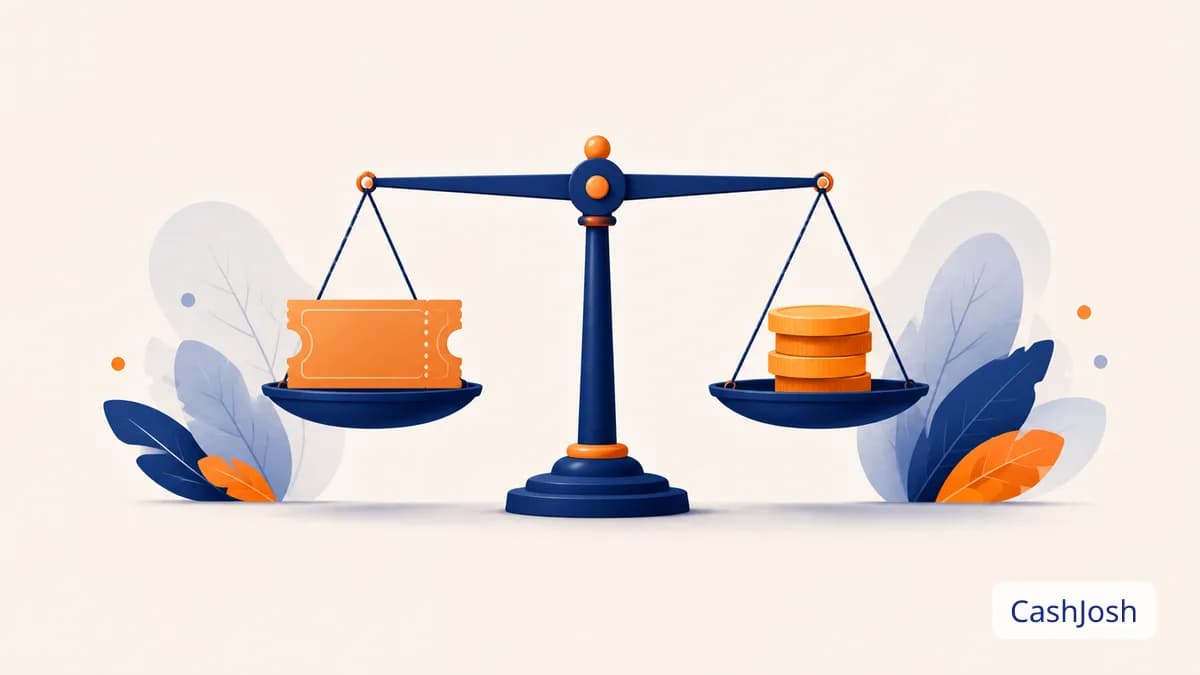
They are not competing discounts. They are separate layers of saving that stack, calculated at different points and funded by different parties. How each one works, a worked example of the full stack, and the rare cases where you actually have to choose.
A coupon code and cashback look similar from a distance. Both save you money on an order. But they work in completely different ways, and mixing them up is why some shoppers assume they have to pick one or the other. They don't. Here is the actual difference, the arithmetic of using both, and the handful of situations where a choice really does come up.
A coupon code changes the price at checkout
A coupon code is applied on the store's own checkout page and reduces what you pay right there, before you complete the order. It is issued by the store, or occasionally by a brand as a launch promotion. The saving is visible and immediate: you see the discounted total before you pay.
Coupons come in a few shapes, and the shape matters:
- Percentage off ("15% off"), often with an upper cap ("up to ₹500").
- Flat amount off ("₹300 off orders above ₹1,999"), usually with a minimum order value.
- First-order or new-user codes, single use, tied to your account or phone number.
- Category or brand codes that only apply to part of your cart.
A code can also simply be expired or region-locked. A "verified" badge on a coupon means it was checked recently; an unverified one is worth trying but more likely to fail.
Cashback is paid after the order, on top of whatever you paid
Cashback is not applied at checkout at all. It is a share of the commission the store pays for referring your order, calculated on whatever you actually end up paying, including after any coupon discount, and credited to your wallet after the order tracks rather than instantly. Nothing on your checkout screen changes. The only visible sign is your CashJosh wallet updating afterwards, first as Pending, then Confirmed once the store's return window closes. (If that distinction is unclear, see what Pending and Confirmed actually mean.)
Cashback is usually a percentage, but for some finance and subscription offers it is a fixed rupee amount per completed action instead.
The layers of a discounted order
On a good day, the price you pay is built from up to five separate layers, each set by a different party:
- List price: the maximum, rarely what anyone pays.
- Sale price: the store's and brand's discount off the usual selling price.
- Coupon code: applied at checkout, on top of the sale price.
- Bank instant discount: applied by your bank at the payment step. Advertised as "10% off" but capped per card, often at a few hundred to a few thousand rupees.
- Cashback: a percentage of what the store records for your order, credited to your wallet later.
They stack because each is funded by someone else: the brand and platform fund layers 2 and 3, your bank funds layer 4, and layer 5 comes out of the affiliate commission. Using one never cancels another.
So do cashback and coupons cancel out?
No. A coupon reduces your order total at checkout. Cashback is then calculated as a percentage of that lower total. Using a coupon slightly reduces the rupee value of your cashback, because the base is smaller, but you are still ahead overall: you got the coupon discount now and the cashback on top. Using both always beats using either alone.
One subtlety: the cashback base is the amount after the coupon but usually before the bank instant discount. The store still records the full post-coupon order value, because your bank, not the store, funds that instant discount. So the bank offer does not shrink your cashback.
A worked example
A jacket listed at ₹6,000, in a sale, with a coupon and a bank offer available:
| Step | Amount |
|---|---|
| List price | ₹6,000 |
| Sale price | ₹4,500 |
| Coupon: 10% off, capped at ₹500 | minus ₹450, so ₹4,050 |
| Bank instant discount: 10%, capped at ₹500 | minus ₹405, so ₹3,645 paid |
| Cashback: 5% of the ₹4,050 post-coupon value | ₹202 credited later |
You pay ₹3,645 today and get ₹202 back once it confirms. Effective cost ₹3,443, which is about 43% off the list price. The breakdown: ₹1,500 from the sale, ₹450 from the coupon, ₹405 from the bank, ₹202 from cashback. Drop any one layer and you simply save less; none of them fight each other.
"Which saves more" is usually the wrong question
Because they stack, the honest answer to "cashback or coupon?" is almost always "both." The question only becomes real in three situations:
- Only one code field, and you have two codes. Some checkouts accept a single promo code. Compare the two: a flat ₹500-off code usually beats a 5% cashback on a small order, but a percentage cashback on a large order can win.
- A store excludes coupon orders from commission. Rare, and always noted on the store's CashJosh page when it applies. There, a coupon and cashback do trade off.
- You need the saving now: cashback takes weeks to confirm and a small share of orders get declined. A coupon is locked in at checkout. If cash flow or certainty matters more than the last few percent, take the guaranteed discount.
When cashback wins outright
- No coupon exists for the store or the item. A lot of electronics and D2C brands run cashback but few public codes.
- The cashback rate beats any code, which is common on D2C brands paying 8 to 12 percent.
- You want withdrawable cash, not a smaller number on this one order. Cashback lands in your wallet and can go to your bank; a coupon only ever reduces one purchase.
When a coupon wins outright
- The code is a large flat discount or a first-order offer worth far more than the cashback percentage on that order size.
- The cashback rate is tiny (1 to 2 percent, typical for marketplaces and thin-margin electronics), so the coupon is where the real saving is.
- You are unsure you will keep the order. A return voids the cashback anyway, so the guaranteed checkout discount is the safer saving on something you might send back.
Where bank card offers fit in
Bank instant discounts, card-linked offers, and no-cost EMI are applied by your bank at the payment step, separately from both the store's coupon and CashJosh's cashback. They stack with both. The catch is the per-card cap: on an expensive item, a "10% off" bank offer capped at ₹1,500 is really a 3 to 4 percent discount, and you usually need to hold the qualifying card before the sale starts.
How to apply both on one order
- Find the store on CashJosh and note any coupon code listed for it.
- Click "Shop & Earn" to open the store through the tracked link. Do this first, in the same browsing session.
- Add your items and go to checkout.
- Paste the coupon code in the store's promo field and apply it.
- At the payment step, select the card or method that carries a bank instant discount or no-cost EMI, if you have one.
- Pay. Cashback appears in your wallet as Pending within a day or two, calculated on the post-coupon total.
The one thing that can break the stack
The exception is a coupon code sourced from outside CashJosh: pulled from a different coupon site, a browser extension that auto-applies codes, or a forum post. Some stores credit the last tracked touchpoint before checkout, so a code applied through another site's tracked link right before you pay can override CashJosh's tracking and cost you the cashback. The safe habit is to use codes listed directly on CashJosh alongside your "Shop & Earn" click, and to disable auto-apply coupon extensions while you check out.
Quick answers
Can I use a coupon code and still get cashback? Yes, as long as you started the order through "Shop & Earn" and the coupon is not tied to a different, competing tracking link.
Does the coupon reduce my cashback? It reduces your order total, which the cashback percentage is then calculated on, so the rupee amount is a little smaller. You still save more overall by using both.
Does a bank offer reduce my cashback? No. The store records the full post-coupon value because your bank funds that discount, so your cashback base is unaffected.
What if only one of them will apply? Compare the guaranteed value of the coupon against the expected value of the cashback (rate times order, minus the small chance it is declined). On large orders with a healthy cashback rate, cashback often wins; on small orders with a flat-off code, the coupon does.
Check today's active coupon codes or browse stores by highest cashback rate to put both to work on your next order. For the bigger picture, see our plain-English guide to how cashback works.
Start earning cashback today
Join CashJosh free and get a welcome bonus in your wallet.
Browse Stores →Related Articles
How Does Cashback Work in India? A Plain-English Guide (2026)
What cashback actually is, how the tracking works behind the scenes, why it sits Pending, how long the wait really is by category, and how to make sure yours lands in your wallet.
Cashback Not Credited? The Complete India Troubleshooting Checklist
Your order doesn't show as Pending, or it should've confirmed by now and hasn't. Here's exactly what to check, in order, before you file a claim.
Pending vs Confirmed Cashback: What the Status Means and How Long Each Takes
Your cashback isn't stuck. It's following the store's own return-window timeline. Here's what Pending and Confirmed actually mean, and real confirmation windows by category.